Showing posts with label Moors. Show all posts

Monday, 18 September 2017

Porto - Portugal

After discovering the southern part of Portugal in 2016, we decided to explore the northern part of Portugal in 2017.  We drove all the way down to Porto where we took a flight to the incredibly beautiful island of Madeira.  Once again as we came into Portugal, I was taken by the scenery, the food, and what it is to be Portuguese.  We drove from Santiago of Compostella to Porto where we spent 2 unforgettable days in that fascinating city
The Old Part of Porto


Along the Duoro River
Porto was love at first sight for me.  Despite a partly wet autumn encounter, the city shone and I was hooked.  I loved the old tramway transport and the relative ease with which one can travel in the city.  Someone said of Porto that “Even when you can’t see the river, you can sense it; even when you can’t see the ocean, you can smell It” Trust me, this is one truly unique city which will enchant you when you discover it.
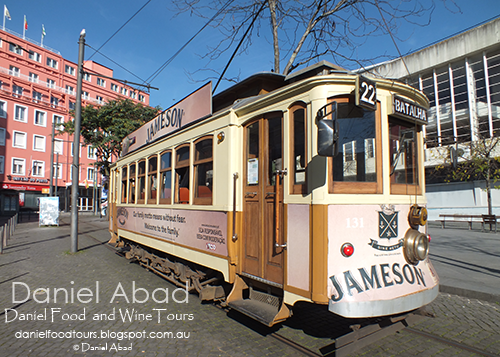
The Tramway
 
Housing Along the Douro River
Porto is the second largest city in Portugal, Lisbon being the largest.  Located along the Douro river estuary in Northern Portugal, it is one of the oldest European centres.  The historical part of that city was proclaimed a World heritage Site by UNESCO in 1996.  Its settlement dates back many centuries, when it was an outpost of  the Roman Empire. 
Barcos Rabelos on the Douro River
The Mighty Douro River
The History of Porto dates back to around 300 BC 300 BC with Celtic people being the first known inhabitants.  Ruins of that period have been discovered in several areas.  During the Roman occupation of the Iberian Peninsula the city developed as an important commercial port.  Porto fell under the control of the Moors during the invasion of the Iberian Peninsula in 711.  In 868, Vimara Peres, a warlord reconquered and secured the land from the Moors. 
Historic Porto


The Modern Porto
 In the 14th and the 15th centuries, Porto's shipyards contributed to the development of Portuguese shipbuilding which was followed by navigation and exploration along the western coast of Africa, initiating the Portuguese Age of Discovery.  During the 18th and 19th centuries the city became an important industrial centre and saw its size and population increase.

Port Activity Along the Douro River


A Beach in Porto
Known as the city of bridges, Porto built its first permanent bridge in 1806.  Three years later, it collapsed under the weight of thousands of fugitives from the French Invasions during the Peninsular War, causing thousands of deaths.  The Ponte D. Maria, a railway bridge, was inaugurated on 4 November of that same year.  It was considered a feat of wrought iron engineering and was designed by Gustave Eiffel, notable for his Parisian tower.  During the 20th century, major bridges were built:  The newest bridge, was completed in 2003.  Two more bridges are planned for the near future

The Ponte D Maria
Porto is home to a number of dishes from traditional Portuguese cuisine.   A typical dish from this city is "Tripas á Moda do Porto" (Tripes Porto style).  Bacalhau á Gomes de Sá (Gomes de Sá Bacalhau) is another typical codfish dish born in Porto and popular in Portugal. 

Cabbage Soup - Delicious
Grilled Atlantic Sardines
Grilled Octopus
Grilled Cod
One of Portugal's internationally famous exports is Port wine.  An internationally renowned wine, it is widely consumed as the city's dessert wine, especially as the wine is made along the Douro River which runs through the city.  Wine, produced in the Douro Valley, was already in the 13th century transported to Porto in “Barcos Rabelos” (flat sailing vessels).  Over the last years, Porto has been experiencing an important touristic expansion and it won the European Best Destination 2012 and 2014 awards
 The Entrance of a Port Wine Degustation Bar
The Bar Area
The Degustation Table


The Famous Barcos Rabelos
The Port Wine Transport Vessel
The Majestic Café is for me the most beautiful café in Porto.  It dates back to 1921 under the name of Elite.  It’s located on Santa Catarina Street, the main pedestrian walkway in the city.  The façade is gorgeous but as you go inside, the real surprise awaits you.  This café used to be the meeting point of the elite of the city.  Writers, politicians, artists, thinkers met in different cafés around the city to exchange ideas and discuss different topics

The Majestic Café
Over the years, the place fell into neglect and the glamour of “La Belle Époque” slowly disappeared.  In 1994, the Majestic re-opened after two years of reconstruction work to bring back the glamour from the 20s and give the café back to Porto.

The Elaborate Ornaments
I fell in love with the cafe the first time I went there and returned once more before leaving Porto.  It has that romantic atmosphere that so few places offer these days.  Once you walk through the main doors, you’re taken back in time and it’s like you can almost feel and hear all that took place at this establishment over its decades of service

Full House at the Majestic Café
I loved the linen tablecloths and serviettes, the uniformed personnel right up to the Maître D.  The food was always delicious and reasonably priced I thought.  No matter who you are, what you’re having or what you’re doing, you will be overwhelmed by the beauty of Majestic Café.  Enjoy it.
A Table Setting at the Majestic
The Aperitif Before the Meal
Cod Fritter -  So Good
Someone once asked me which Portuguese city did I like best.  This was a question I simply couldn’t answer.  Every place I visited in this country has left me amazed and charmed and for various reasons.  There is the history, the architecture, the language, the food, the music, the elegance and the “joie de Vivre” so unique to this country.  Each place has its own identity but remains oh so Portuguese!!!  You simply must visit this country one day; you won’t regret it.  As for me; I still haven’t come up with an answer to this question

Monday, 15 August 2016

Granada - Spain

The first Spanish city I visited in 2015 was Granada.  My friend and I left the coast in the early hours of the morning under a typically spotless sky and warm Spanish day.  The weather, as we were nearing Granada turned increasingly darker and on our arrival, the city welcomed us with rain.  I even had to buy an umbrella simply to get about and check a few places in the old part of the city.  Needless to say that my planned visit to the famous Alhambra, located near Granada had to be cancelled.  Despite the weather, I was completely taken by the rare beauty and the historic past of that place during my brief visit.  I will definitely return to Granada with hopefully a more clement sky on my side.  My friend who had previously visited this city generously provided me with some images of this amazing city.

Granada - Spain


A Street in Granada - Spain
Granada is the capital of the province of Granada in the community of Andalusia in the south of Spain.  It is about 70km from the Mediterranean coast between Almeria and Malaga.  It is located at the foot of the Sierra Nevada Mountains and sits at an average elevation of 700 meters above sea level.  It is the 13th-largest urban area of Spain.
One of the many churches in Granada - Spain
A lamp post in a Granada Square

A lamp post in a Granada Square
When the Moors arrived, the town was largely inhabited by Jews.  They called the place” Garnat-al-Yahud” - Granada of the Jews.  The Jews are said to have been one of the first peoples to settle in Spain, even before the Romans.
Granada Moorish architecture - Spain
 Ornate footpath

Decorative design on the footpath made out of black and white pebbles.
It was inhabited and grew because it was easy to defend and although it is dry in the summer, there is always a reliable supply of water coming from the mountain that is fuelled by melting snow.  The rich soil in the Vega plain therefore has provided an ample food source for many centuries.
Shop front in Granada - Spain
The region has experienced Roman and Visigoth influences.  The Arabs, invading the peninsula in the 8th century, gave it its current name of Granada.  At some point, the various Christian groups in the area settled their differences, joined together and steadily drove the Arabs out of Spain.  Granada was the last stronghold.
Church entrance - Granada, Spain
The Moslems and the Jews were forced to leave the country or convert to Christianity.  At the same time, Christopher Columbus came to Granada to ask Isabel and Ferdinand for a grant to build ships so that he could conquer the Americas.  They gave him the money and the rest is History.
One of the most brilliant jewels of universal architecture is the Alhambra; a series of palaces and gardens built under the Nazari Dynasty in the 14th Century.  This mighty compound of buildings with its fountains and gardens overlooks the city below.  The construction works of the Alhambra were undertaken in the 13th and 14th centuries, with most of the Alhambra having been built between 1333 and 1354.  The Alhambra was declared a World Heritage Site by UNESCO in 1984.  It is certainly one of the most visited monuments in Spain.
One of the many gardens in the Alhambra
Amazing gardens and fountains...

A fountain at the Alhambra
 A view from the Alhambra

Partial view of Granada - Spain from the Alhambra


Wall decoration at the Alhambra
In Granada, the Sacromonte hill is one place where you can enjoy Flamenco.  The hill overlooks the city from the North and is famous for its cave dwellings.  It was once the home of Granada's large gypsy community.  The gypsies arrived about 600 years ago and one of the places where they congregated was in the caves of the Sacromonte.  The mixture of Arabic influence combined with the particular lifestyle and temperament of the gypsies created Flamenco.
Traditional Spanish Flamenco Outfit

Ladies in Traditional Spanish Outfits

Probably the most famous “Granadino” (Granada inhabitant) is the well-known playwright and author Garcia Lorca.  He is reputed to be one of the best writers of the twentieth century.  What makes him even more memorable is the fact that during the bloody Spanish civil war 1936-39, he was taken to a village near Granada and shot by a firing squad.

However short and wet my visit to Granada was, I still enjoyed it immensely.