Showing posts with label Church. Show all posts

Monday, 22 August 2016

Malaga - Spain

Our next stop was Málaga, the gateway to southern Spain and the Costa del Sol; the birthplace of painter and sculptor Pablo Picasso and actor Antonio Banderas.  It is a hectic city of nearly 600,000 people.  Boasting one of the best climates in Europe, Málaga is now one of Spain’s hottest cultural, gastronomic and leisure destinations.  The port and beach area, with its Michelin star restaurants, cocktail bars, fashion boutiques, and beaches are all coming together to offer its visitors destination of excellence.
The City Centre of Malaga


Malaga - view from the Castle
Málaga lies on the shores of the Mediterranean Sea.  It is the second most populous city of Andalusia and the sixth largest in Spain.  There is an impressive number of places and monuments to visit, including the 11th-century Alcazaba fort and the Picasso Museum.  The old city is a haven for gourmets with countless taverns and bistros, each with good food and great wines.
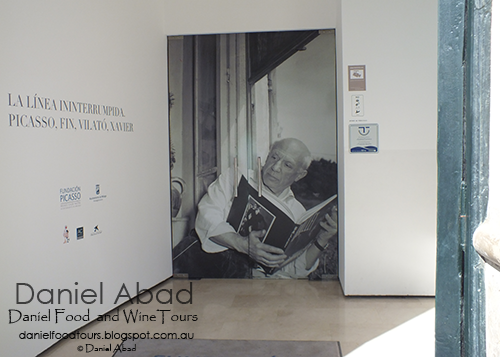
Entry to the Picasso Museum
 Information Plaque
Picasso's Birth Place
Málaga's history spans about 2,800 years.  It was founded by the Phoenicians as Malaka about 770 BC.  From 218 BC it was ruled by the Romans.  After the fall of the empire it was under Islamic domination for 800 years.  In 1487 it again came under Christian rule.
Moorish Garden and Bitter Orange Trees
The Architecture - apartments...
Malaga Architecture
Our daytime visit started with the bullfighting ring and its museum.  I neither condemn nor condone this kind of entertainment and the cruelty it inflicts on the animals.  I simply look at it as one of the country’s traditions and went there to get a better appreciation of what the Corrida is all about.  As such, the museum was a very informative part of my stay in Málaga.  The costumes and the folklore that go with this practice were fascinating.  We then took a walk around, marvelling at all the sights, the sounds and the smells of this incredibly beautiful and friendly city.
The Makaga Bull Fighting Ring - Spain
The costume on display

The Bull Fighter's Traditional Costume

Leisurely Promenade in Malaga
One of many decorated balconies in Malaga - Spain
Decorated Balcony in Malaga
One of the many “Must See” places is the Alcazaba; a Moorish fortress set high on a hill overlooking the city.  We reached that place with the city tour bus, which drops visitors off and picks them up at various points right through the day.  On the way, the bus passed by of Málaga’s trendy suburbs with each house more elegant than the next one.  The breath-taking views from the ancient walled fortress that look out across the city and out to the Mediterranean Sea certainly made this visit extra special.
The Alcazaba Fortress
 The fortress and gardens..

The Gardens Inside the Fortress
Málaga’s Renaissance Cathedral has a dominating presence in the heart of the old town.  Construction started in 1528 after the city was conquered by Ferdinand and Isabella, and finished in 1782.
The Malaga Cathedral
 The Malaga Cathedral -  view from the side

Another view of the Cathedral
At night time, the city takes on a new look.  Lights everywhere, streets bustling with music, exuberant people everywhere and an infectious sense of “Joie de Vivre” wherever we went.  We spotted a restaurant where Flamenco was performed at night and decided it would be the place to have dinner and enjoy a taste of what Southern Spain entertainment is all about.  We weren’t disappointed.  The food was superb and the show a true reflection of the passion and fire that runs in the veins of the people from this most remarkable place.
Malaga Centre by night
 The city colours.

Business building in Malaga
The Flamenco Restaurant and dancer...
The Flamenco Restaurant's interior
 The Flamenco troupe on stage...
The Flamenco Troupe
 The passionate and fiery dance...

Strength, timing and the passion of Flamenco...
The Flamenco Dancer
 The beauty of the dancer

The passion of the Flamenco
Málaga is now one of the foremost gastronomical destinations in Spain.  From humble tapas to high class restaurants, it is worth visiting the city, just to savour its food scene, much of which using the smaller fish (anchovies, mullet, mackerel) as well as shellfish and on typical recipes such as gazpacho.
Fresh Clams and Lemon Juice
More glorious food...
Grilled Prawns and Sea Salt
There are 15 beaches within Malaga’s city limits.  The beaches are clean, family-friendly and accessible, with restaurant and bars offering everything from traditional Pescaito Malagueño (fried mixed fish), to Moroccan-style couscous and mint tea.
One of the beaches in Malaga
The beaches
The view of the beach from our Restaurant
We had a memorable lunch at a restaurant overlooking the beach.  Between the food and the view, we could have stayed there for ages; it was simply perfect.
Our Restaurant by the beach
Delicious food
Vinegar battered fish pieces
Along with Malaga's emerging food scene, there is a wine tradition that dates back to the Phoenicians.  Best known for its sweet wines made from the Moscatel and Pedro Ximenez grape varieties; one mustn't go home without visiting one of Malaga's traditional wine bodegas. 

Monday, 15 August 2016

Granada - Spain

The first Spanish city I visited in 2015 was Granada.  My friend and I left the coast in the early hours of the morning under a typically spotless sky and warm Spanish day.  The weather, as we were nearing Granada turned increasingly darker and on our arrival, the city welcomed us with rain.  I even had to buy an umbrella simply to get about and check a few places in the old part of the city.  Needless to say that my planned visit to the famous Alhambra, located near Granada had to be cancelled.  Despite the weather, I was completely taken by the rare beauty and the historic past of that place during my brief visit.  I will definitely return to Granada with hopefully a more clement sky on my side.  My friend who had previously visited this city generously provided me with some images of this amazing city.

Granada - Spain


A Street in Granada - Spain
Granada is the capital of the province of Granada in the community of Andalusia in the south of Spain.  It is about 70km from the Mediterranean coast between Almeria and Malaga.  It is located at the foot of the Sierra Nevada Mountains and sits at an average elevation of 700 meters above sea level.  It is the 13th-largest urban area of Spain.
One of the many churches in Granada - Spain
A lamp post in a Granada Square

A lamp post in a Granada Square
When the Moors arrived, the town was largely inhabited by Jews.  They called the place” Garnat-al-Yahud” - Granada of the Jews.  The Jews are said to have been one of the first peoples to settle in Spain, even before the Romans.
Granada Moorish architecture - Spain
 Ornate footpath

Decorative design on the footpath made out of black and white pebbles.
It was inhabited and grew because it was easy to defend and although it is dry in the summer, there is always a reliable supply of water coming from the mountain that is fuelled by melting snow.  The rich soil in the Vega plain therefore has provided an ample food source for many centuries.
Shop front in Granada - Spain
The region has experienced Roman and Visigoth influences.  The Arabs, invading the peninsula in the 8th century, gave it its current name of Granada.  At some point, the various Christian groups in the area settled their differences, joined together and steadily drove the Arabs out of Spain.  Granada was the last stronghold.
Church entrance - Granada, Spain
The Moslems and the Jews were forced to leave the country or convert to Christianity.  At the same time, Christopher Columbus came to Granada to ask Isabel and Ferdinand for a grant to build ships so that he could conquer the Americas.  They gave him the money and the rest is History.
One of the most brilliant jewels of universal architecture is the Alhambra; a series of palaces and gardens built under the Nazari Dynasty in the 14th Century.  This mighty compound of buildings with its fountains and gardens overlooks the city below.  The construction works of the Alhambra were undertaken in the 13th and 14th centuries, with most of the Alhambra having been built between 1333 and 1354.  The Alhambra was declared a World Heritage Site by UNESCO in 1984.  It is certainly one of the most visited monuments in Spain.
One of the many gardens in the Alhambra
Amazing gardens and fountains...

A fountain at the Alhambra
 A view from the Alhambra

Partial view of Granada - Spain from the Alhambra


Wall decoration at the Alhambra
In Granada, the Sacromonte hill is one place where you can enjoy Flamenco.  The hill overlooks the city from the North and is famous for its cave dwellings.  It was once the home of Granada's large gypsy community.  The gypsies arrived about 600 years ago and one of the places where they congregated was in the caves of the Sacromonte.  The mixture of Arabic influence combined with the particular lifestyle and temperament of the gypsies created Flamenco.
Traditional Spanish Flamenco Outfit

Ladies in Traditional Spanish Outfits

Probably the most famous “Granadino” (Granada inhabitant) is the well-known playwright and author Garcia Lorca.  He is reputed to be one of the best writers of the twentieth century.  What makes him even more memorable is the fact that during the bloody Spanish civil war 1936-39, he was taken to a village near Granada and shot by a firing squad.

However short and wet my visit to Granada was, I still enjoyed it immensely.

Monday, 11 July 2016

Sofia - Bulgaria

My plane landed in Sofia late one evening.  Veska my sister in-law and Denislav her son met my brother and me at the airport.  On the way to Veska’s parents’ apartment, I managed a glimpse of the city.  As we reached the centre, I noticed a number of large arteries with imposing buildings.  Veska’s parents were away in Dragoinovo, at their summer country house so we had the use of their apartment for the next few days.
 
After a quick dinner; tomato and white cabbage salad, assorted cold meats and dips.  We finished the meal with some candied green figs and one of those deliciously creamy yogurt I had heard so much about.
Early that morning, breakfast taken, we headed to the city centre - My first real look at Sofia and impressions of an Eastern European city.  I saw many parks and manicured gardens scattered all over the city – very pleasant.  It was a hot day and people were enjoying the refreshing relief from the sun under some truly majestic trees.
Sofia - Parklands

The magnificent Batenberg Square where people meet to socialise and enjoy a drink with friends.
Sofia - Batenberg Square
Home to the country’s finest museums, galleries, restaurants and entertainment venues, Sofia is the capital and largest city of Bulgaria with a population of more than 1.5 million people.  The city is located in the western part of the country, within less than 50 kilometres drive from the Serbian border at an average altitude of 550 metres above sea level.  The city is known for its 49 mineral and thermal springs.
Sofia - Presidential Palace Guard
One of the commemorative statues scattered in the city centre of Sofia.
Sofia - Statue in Hommage of Bulgarian Pilots
This is a largely modern, youthful city with its old east-meets-west atmosphere still very evident.  Onion-domed churches, Ottoman mosques and Red Army monuments & statues share the skyline with modern shopping malls and five-star hotels.

Sofia - Alexander Nevski Catherdral
Another of the historical religious buildings of the city.
Sofia - Russian Church
Another style of religious architecture...
Sofia - Sveta Nedelia Church
The courthouse in the city centre.
Sofia - Courthouse
Sofia has a history of nearly 7000 years and it is the second oldest city in Europe.  Remains from a Neolithic settlement are traced to the 3rd-4th millennium BC.  In the 8th century BC, the Thracian tribe Serdi settled here and gave the city its first name “Serdika or Serdonpolis”.  The city's earliest official mention was in the 7th century BC.
Around 29 BC, the Romans conquered the city.  During that era, the emperor Constantine the Great referred to it as "my Rome".  It became one of the first Roman cities where Christianity was recognised as an official religion.  The city was destroyed in the 447 invasion of the Huns.  It was rebuilt by Byzantine Emperor Justinian.

Sofia - Sveti Georgi Church and Roman Ruins
The Roman Ruins are scattered all over the city of Sofia and are a constant reminder of the city's historical past.
Sofia - Roman Ruins in an underground passage
The city became part of the First Bulgarian Empire during the reign of Khan Krum in 809.  It fell to the Byzantine Empire in 1018.  In 1382, the city fell to the Ottomans.  It was liberated five centuries later, in 1878, and on April 3, 1879, it was declared the capital of the newly-liberated Bulgarian nation.  The city’s annual celebration is observed on 17 September, in honour of the martyrdom of Saint Sofia and her three daughters.
As I wandered the streets taking in the many sights, - From Roman ruins to orthodox churches to Red Army monuments and statues- I noticed some tourists – some Asian, others German, Swiss and French.  A car-free section of the city has recently been reserved to the public, offering fashion shops, cafes, restaurants.  One could have been in any other modern western city.  The women are very beautiful and take good care of themselves and their appearance.


Sofia - Russian Army Monument
One part of the Russian Army Monument photographed up close - this statue sits to the right of the main column. 
Sofia - Russian Army Monument
The left part of the Russian Army Monument photographed up close.
Sofia - Russian Army Monument
We purchased a few items from one of the many food shops displaying some appetising local gastronomy.  Back home, we lunched on some Lentil, cheese and stinging nettle rolls, a local sausage wrapped in pastry and a white cabbage and tomato salad.
Sofia - the food, Banica

Sofia - the food, Sausage & Stinging Nettle Rolls
Sofia - Local Beer
Sofia - the food, assorted Savoury Pastries

Soon after, Nasko – Veska’s cousin and his wife Vania picked us up en route for Melnik, one of the cutest little village I have ever had the pleasure to visit.