After a glorious 2-day stay in Porto, we flew to the
island of Madeira.I had heard a lot
about that place but I wasn’t ready for the true beauty of its coastline, the
luxurious and abundant vegetation, the friendly and helpful locals and the
delicious foods that awaited us there.After a short 90-minute or so flight, we touched down at Funchal airport.
Daniel Food and Wine Tours: Madeira Island
Daniel Food and Wine Tours: The Mountain Peaks of Madeira
The archipelago of Madeira is a Portuguese archipelago situated in the North Atlantic
Ocean, southwest of Portugal, 520 km from the African coast and 1,000 km from
the European continent. The archipelago
is just under 400 kilometres north of Tenerife in the Canary Islands.It includes the islands of Madeira, Porto
Santo and the Desertas.The capital of
Madeira is Funchal, located on the main island's south coast.
Daniel Food and Wine Tours: The Desertas Islands
Daniel Food and Wine Tours: Funchal
Madeira is at the top of a
massive shield volcano that rises about 6 km from the floor of the Atlantic
Ocean.The volcano formed over 5 million
years ago.The most recent volcanic
eruptions were on the west-central part of the island only 6,500 years ago. Madeira was claimed by
Portuguese sailors in the service of Prince Henry the Navigator in 1419 and
settled after 1420. The archipelago is
considered to be the first territorial discovery of the exploratory period of
the Portuguese Age of Discovery, which extended from 1415 to 1542.
Daniel Food and Wine Tours: Portugal's Empire During the Age of Discoveries
Today, it is a popular year-round resort, being
visited every year by about one million tourists. The region is noted for its Madeira wine,
gastronomy, historical and cultural value, its flora and fauna which are
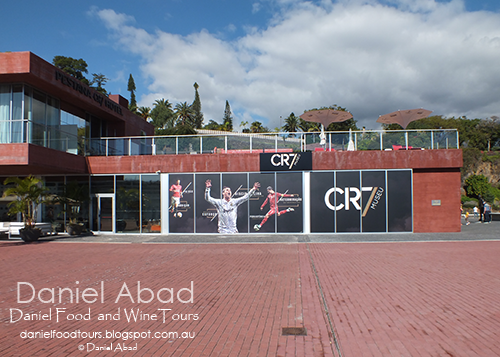
classified as a UNESCO World Heritage Site.The famous soccer player Ronaldo was born in Funchal and the city
dedicated a museum to him.
Daniel Food and Wine Tours: Ronaldo's Museum
Daniel Food and Wine Tours: Ronaldo's Statue
Archeological evidence
suggests that the islands may have been visited by the Vikings sometime between
900-1030 AD.Knowledge of some Atlantic
islands, such as Madeira, existed before their formal discovery and settlement,
as the islands were shown on maps as early as 1339.
The first Portuguese settlers
began colonising the islands around 1420 or 1425.When Grain production began to fall, other
commercial crops were planted so that the islands could be profitable. The planting of sugarcane, and later sugar
beet, allowed the introduction of sugar into Europe, where it was a rare and
popular ingredient.
Sugarcane production became
the primary engine of the island's economy, increasing the demand for labour. African slaves were used during portions of
the island's history to cultivate this crop.
After the 17th century, as
Portuguese sugar production was shifted mainly to Brazil, and elsewhere,
Madeira's most important commodity product became its wine.Madeira is a fortified wine, produced in the
Islands. Varieties may be sweet or dry.It has a history dating back to the Age of
Exploration when Madeira was a standard port of call for ships heading to the
New World or East Indies.To prevent the
wine from spoiling, neutral grape spirits were added.When an unsold shipment of wine returned to
the islands after a round trip, it was discovered, that the flavour of the wine
had been transformed by exposure to heat and movement.Today, Madeira is noted for its unique winemaking
process which involves heating the wine and deliberately exposing the wine to
some levels of oxidation.
Daniel Food and Wine Tours: Madeira Wine
The British occupied the
island in 1801 After the Peace of Amiens, British troops withdrew in 1802, only
to reoccupy Madeira in 1807 until the end of the Peninsula War in 1814.
On 31 December 1916 during
the Great War, a German U-boat entered Funchal harbour on Madeira and sank
three ships.
Charles I, the last Emperor of the
Austro-Hungarian Empire, went into exile in Madeira, after his second
unsuccessful coup d’état in Hungary. He
died there on 1 April 1922.On 1 July
1976, following the democratic revolution of 1974, Portugal granted political
autonomy to Madeira. The region now has
its own government and legislative assembly.Two of the attractions in Funchal are its teleferico which takes you
right up to the top of the city and the toboggans which in turn take you right
back to the bottom in some sort of basket guided by two attendants.
Daniel Food and Wine Tours: The Funchal Teleferico
Daniel Food and Wine Tours: The Teleferico Terminal at the top of the Hill
Daniel Food and Wine Tours: The Toboggans and their Drivers
Daniel Food and Wine Tours: Yesteryear's Toboggan Drivers
Drought conditions, coupled with hot and windy weather
in summer, regularly cause numerous wildfires.In August 2010, a fire burned through 95 percent of the Funchal
Ecological Park.In July 2012 Madeira
suffered again from severe drought and wildfires broke out in the midst of
temperatures up to 40 degrees. Numerous
residents had to be evacuated and firefighters were sent from the mainland to
help battle the fires.In August 2016,
wildfires again spread on Madeira and reached Funchal, killing three people and
destroying many homes.
Daniel Food and Wine Tours: Madeira Fires in 2012
Tourismis an important sector in the region's
economy, providing support throughout the year for commercial, transport and
other activities.Whale watching has
become very popular in recent years.Many species of dolphins and whales can be spotted near the coast and
offshore.Because of the geographic
situation of Madeira in the Atlantic Ocean, the island has an abundance of fish
of various kinds.
Daniel Food and Wine Tours: Bryde's Whale Swimming off Madeira
Funchal
We spent two days in Funchal and stayed at the Monte
Carlo Hotel.Previously a school, the
hotel offers large comfortable rooms with breath-taking views of the bay and
the ocean.The hotel is a reminder of
the many influential tourists from a bygone era who regularly frequented these
premises.
Daniel Food and Wine Tours: Monte Carlo Hotel
Daniel Food and Wine Tours: Entrance of the Monte Carlo Hotel
Funchal is the capital and principal city of Madeira.Located along the southern coast of the
island. It is a modern city, located within a natural geological amphitheatre. Beginning at the harbour, the neighbourhoods
and streets rise almost 1,200 metres along gentle slopes that helped to provide
a natural shelter to the early settlers.Funchal is the 6th largest city in Portugal, and has been the capital of
Madeira for more than five centuries.
Daniel Food and Wine Tours: View of the Funchal from the Monte Carlo Hotel
The name comes from the Portuguese word "funcho" meaning fennel and
"al", for plantation of fennel.This name was applied by the first settlers who
landed on its shores and noted the abundance of wild fennel growing in that
region.
Daniel Food and Wine Tours: Anyone for a Ride?
Daniel Food and Wine Tours: Mosaic Work
This settlement began around 1424. Owing to its geographic location, the site
became an important maritime port, whereas its productive soils became a focus
for the new settlers.Its coastal
position, the most productive on the island, quickly permitted Funchal to
develop.
Daniel Food and Wine Tours: Cruise Ship at the Funchal harbour
Funchal became an important transfer point for
European commercial interests; many sailors and merchants located in Funchal in
order to take advantage of the transient conditions of port. Christopher Columbus was one of the early
settlers.During the second half of the
15th century, the sugar industry expanded significantly along the
southern coast, making Funchal the most important industrial centre of the
industry. The island, and Funchal
specifically, were vulnerable to pirate attacks.During the 16th century, Funchal was an
important stop-over for caravels travelling between the Indies and the New
World.
Daniel Food and Wine Tours: Replica Age of Discovery Ship
With the formal creation of the Port of Funchal, and
later the establishment of the Santa Catarina Airport, Funchal turned into a
major international tourist destination.The harbour of Funchal was the only major port in Madeira. Since 2007 it has been fully dedicated to
passenger transport – cruise ships and ferries – and other tourist-related
boats and yachts. In that year all
remaining fishing activity and cargo trade was moved to the newly developed
port of Caniçal, 19 km to the east.
Daniel Food and Wine Tours: View of the Funchal Airport from our Hotel
Funchal Airport is located east of the city, in the
municipality of Santa Cruz. The airport
was one of the most dangerous airports in the world due to the limited flat
space in close proximity to cliffs, but the extension of the runway on concrete
pillars in the sea has greatly improved safety.
Daniel Food and Wine Tours: Funchal Airport at Night
Porto
Moniz
We
left busy Funchal and headed to Porto Moniz in the North of the island.On the way, more spectacular scenery, lots of
tunnels dug through the mountainous terrain to allow the traffic to flow.I was taken by the luxuriant vegetation, the
ocean on one side of the road and steep slopes on the other side – not unlike some
coastal parts of New Zealand in fact.After a short and most pleasant drive, we reached our destination.
Daniel Food and Wine Tours: The Relentless Assault of the Atlantic Ocean
Daniel Food and Wine Tours: Rock Formation and the Ocean
Porto Moniz is a municipality in the northwest corner of the island of Madeira.The municipality features a natural complex of lava pools that are popular with locals and tourists.Porto Moniz is surrounded by massive hills offering wonderful view points over the town and its coastline.It is unclear when the area of Porto Moniz was first colonised, although it is likely that it occurred at the beginning of the last quarter of the 15th century.
Daniel Food and Wine Tours: Lava Pools
Daniel Food and Wine Tours: More beautiful Lava Pools
The natural swimming pools
at Porto Moniz are formed by volcanic lava into which the sea flows naturally. These pools have been
carved out from the black basalt rocks and are the highlight of the village.These pools have been enhanced to become the town’s main
attraction. This space has a surface area of 3800 m².
Daniel Food and Wine Tours: The Restaurant Complex at the Lava Pool
Gaula
We
reluctantly left Porto Moniz and headed to Gaula as our stay in this enchanting
island was coming to an end.We chose
Gaula for no particular reason other than it was located only 7 km from the Funchal
airport.There again we weren’t
disappointed.Our hotel or apartment I
should say not only offered a very comfortable place to spend our last night in
the island but also a spectacular view of the bay and the nearby airport.
Daniel Food and Wine Tours: The Desertas Islands
Daniel Food and Wine Tours: Sunrise at Guala
At the hotel, our friendly receptionist told us
we simply had to visit Caniçal, made famous by
its recent whale industry and a museum entirely dedicated to this
activity.Not having much time left, we
headed straight for that place.
Caniçal
Opened to the public in 1989 in the fishing village of Caniçal, the whale museum shows the history of whale hunting in the seas of Madeira.The museum bears witness to the entire history of whaling and the activities that formed a central part of many fishermen's lives for many decades. Whaling has been prohibited in Madeiran waters since 1982. Instead, those sailors who once harpooned whales for a living are now working hard to help preserve these gentle giants of the ocean. In an effort to promote this ecological issue many fishermen surrendered their hunting instruments to the museum. It is one of the most innovative museums of its kind internationally.
Daniel Food and Wine Tours: The Canical Whaling Station
Opened in a new building in 2011, the museum is now is equipped with a
valuable collection of utensils and past experiences. The museum is an accurate witness to the history
of whaling in Madeira throughout the 20th century.This museum houses life-size models of whales
and dolphins and 3D stereoscopic movies.
Daniel Food and Wine Tours: Life-size Model of Monk Seal
The institution also promotes scientific research projects on cetaceans
and marine life in the seas of Madeira, as well as the collection, preservation
and study of the heritage and documentation on the history of whaling in
Madeira.A major attraction of
the museum is the model of a life-size whale on display. Alongside the replica
of the whale is a small fishing boat, similar to those used when fishermen went
whale hunting. Visitors are able to
compare the sizes and dimensions of the boat and whale to each other - and in
so doing appreciate how difficult and dangerous this now banned activity must
have been for the local residents of Caniçal.
Daniel Food and Wine Tours: Life-size Replica of a Whale and Whale Boat
Some individuals have even created crafts and
pieces of artwork from parts of old whale bones or teeth.On display, there are many photographs and
video footage, depicting many of the processes involved in the trapping of
whales by Madeiran fishermen. The visual
exhibit ranges in pictures of the preparation of boats, whale spotting on the
high sea, hunting methods, and images of festivities after a successful hunt. There are other pictures showing the processing
and transport of processed whale material, including oil extraction and meat
preparation.
Daniel Food and Wine Tours: A Dish of Patellas
Daniel Food and Wine Tours: Black Scabbardfish with Banana
The following day, we left this amazing island and headed back to Porto and then on to Spain’s Salamanca as we were making our way back to Calpe.We were totally enchanted by our brief stay on the island and some of the specialties we ate there.My only recommendation to anyone contemplating a visit there would be to allocate more than the four days we had.There is so much to see and the whole place needs a thorough investigation.We will take more time when we next return to beautiful Madeira.
After discovering the southern part of Portugal
in 2016, we decided to explore the northern part of Portugal in 2017.We drove all the way down to Porto where we took
a flight to the incredibly beautiful island of Madeira.Once again as we came into Portugal, I was
taken by the scenery, the food, and what it is to be Portuguese.We drove from Santiago of Compostella to
Porto where we spent 2 unforgettable days in that fascinating city
The Old Part of Porto
Along the Duoro River
Porto was love at first sight for me.Despite a partly wet autumn encounter, the
city shone and I was hooked.I loved the
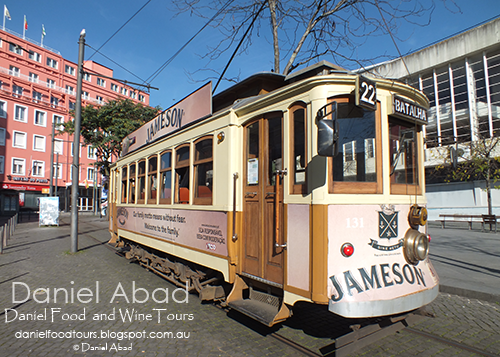
old tramway transport and the relative ease with which one can travel in the
city.Someone said of Porto that “Even
when you can’t see the river, you can sense it; even when you can’t see the
ocean, you can smell It” Trust me, this is one truly unique city which will
enchant you when you discover it.
The Tramway
Housing Along the Douro River
Porto is the second largest city in Portugal, Lisbon being the largest. Located along the Douro river estuary in Northern Portugal, it is one of the oldest European centres. The historical part of that city was proclaimed a World heritage Site by UNESCO in 1996. Its settlement dates back many centuries, when
it was an outpost of the Roman Empire.
Barcos Rabelos on the Douro River
The Mighty Douro River
The History of Porto dates back to around 300 BC 300 BC with Celtic people being the first known inhabitants. Ruins of that period have been discovered in several areas. During the Roman occupation of the Iberian Peninsula the city developed as an important commercial port. Porto fell under the control of the Moors during the invasion of the Iberian Peninsula in 711. In 868, Vimara Peres, a warlord reconquered and secured the land from the Moors.
Historic Porto
The Modern Porto
In the 14th and the 15th centuries, Porto's shipyards
contributed to the development of Portuguese shipbuilding which was followed by
navigation and exploration along the western coast of Africa, initiating the Portuguese Age of Discovery. During the 18th and 19th centuries the city
became an important industrial centre and saw its size and population increase.
Port Activity Along the Douro River
A Beach in Porto
Known as the city of bridges, Porto built its first
permanent bridge in 1806. Three years
later, it collapsed under the weight of thousands of fugitives from the French
Invasions during the Peninsular War, causing thousands of
deaths. The Ponte D. Maria, a railway bridge, was inaugurated on
4 November of that same year.It was
considered a feat of wrought iron engineering and was
designed by Gustave Eiffel, notable for his Parisian tower.During the 20th century, major bridges were
built: The newest bridge, was completed
in 2003. Two more bridges are planned for
the near future
The Ponte D Maria
Porto is home to a number of dishes from traditional Portuguese cuisine. A typical dish from this city is "Tripas á Moda do Porto" (Tripes Porto style). Bacalhau á Gomes de Sá (Gomes de Sá Bacalhau) is another typical codfish dish born in Porto and popular in Portugal.
Cabbage Soup - Delicious
Grilled Atlantic Sardines
Grilled Octopus
Grilled Cod
One of Portugal's internationally famous exports is Port wine. An internationally renowned
wine, it is widely consumed as the city's dessert wine, especially as the wine is
made along the Douro River which runs through the city. Wine, produced in the Douro Valley, was already in the 13th century transported to Porto
in “Barcos Rabelos” (flat
sailing vessels).Over the last years,
Porto has been experiencing an important touristic expansion and it won the
European Best Destination 2012 and 2014 awards
The Entrance of a Port Wine Degustation Bar
The Bar Area
The Degustation Table
The Famous Barcos Rabelos
The Port Wine Transport Vessel
The Majestic Café is for me the most beautiful café in Porto.It dates back to 1921 under the name of Elite.It’s located on Santa Catarina Street, the main pedestrian walkway in the city.The façade is gorgeous but as you go inside, the real surprise awaits you.This café used to be the meeting point of the elite of the city.Writers, politicians, artists, thinkers met in different cafés around the city to exchange ideas and discuss different topics
The Majestic Café
Over the years, the place fell into neglect and the glamour of “La Belle Époque” slowly disappeared.In 1994, the Majestic re-opened after two years of reconstruction work to bring back the glamour from the 20s and give the café back to Porto.
The Elaborate Ornaments
I
fell in love with the cafe the first time I went there and returned once more
before leaving Porto.It has that
romantic atmosphere that so few places offer these days.Once you walk through the main doors, you’re
taken back in time and it’s like you can almost feel and hear all that took
place at this establishment over its decades of service
Full House at the Majestic Café
I
loved the linen tablecloths and serviettes, the uniformed personnel right up to
the Maître D.The food was always
delicious and reasonably priced I thought.No matter who you are, what you’re having or what you’re doing, you will
be overwhelmed by the beauty of Majestic Café.Enjoy it.
A Table Setting at the Majestic
The Aperitif Before the Meal
Cod Fritter - So Good
Someone once asked me which Portuguese city did
I like best.This was a question I
simply couldn’t answer.Every place I
visited in this country has left me amazed and charmed and for various
reasons.There is the history, the
architecture, the language, the food, the music, the elegance and the “joie de
Vivre” so unique to this country.Each
place has its own identity but remains oh so Portuguese!!!You simply must visit this country one day; you
won’t regret it.As for me; I still
haven’t come up with an answer to this question